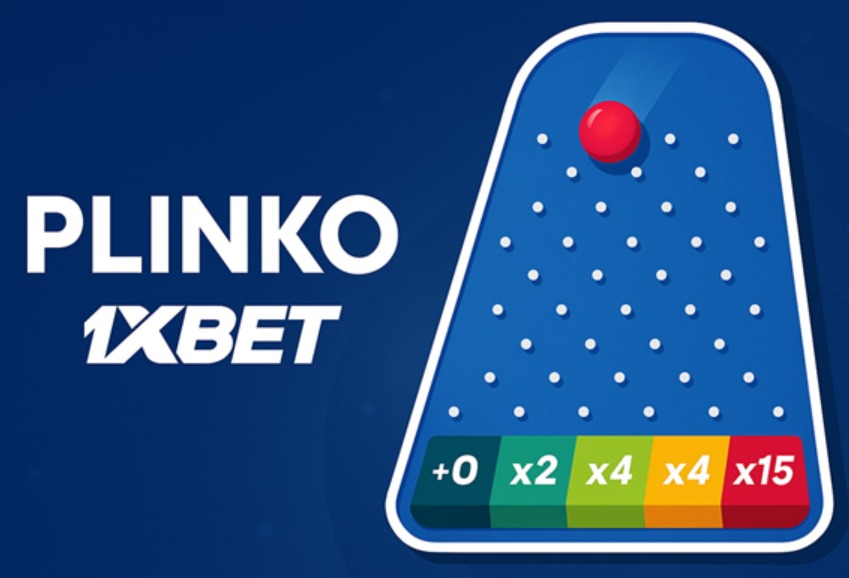
How the Plinko Game Works: Rules, Setup, and Core Features
At first glance, you see a peg pyramid, one ball, and colored slots. The Plinko game on 1xBet runs on clear probability, and every bounce matters because gravity and peg placement redirect the path. The ball drops from the top, and it ricochets until it lands in a cell with a fixed multiplier. Physics injects randomness while math sets the odds, so each round stays unique. Players in India adjust three levers: bet size, board rows, and risk level, so volatility changes before the drop and session goals stay aligned.
The interface favors quick control and clean choices, and it reacts instantly to your setup. You pick a layout, choose a risk mode, and confirm a stake, so the payout map updates in real time. As rows increase, peg density rises and bounce paths multiply, so outcomes spread out across the board. Because layout and risk interact tightly, your final settings create a personal volatility profile on 1xBet that you can read and refine over multiple rounds.
Provably Fair System
Every round on 1xBet generates a unique hash with the SHA512 algorithm, and this locks the outcome before the ball lands. After the drop, you compare the shown result plus the secret key with the original hash because both values must match exactly. A match proves there was no manipulation, and the record remains auditable for later checks. This turns fairness into a fast, repeatable verification step, and it replaces guesswork with a simple code match.
Risk Levels
You can choose low, regular, or high risk, and each mode reshapes the payout map. High risk widens the spread, so edge slots can reach 13x while the center may sit near 0.4x. Low risk compresses that range and keeps returns steadier across many drops. Regular sits between both, and many players use it when they want controlled swings because session length and bankroll targets matter.
Row Settings
Each round lets you scale the board from compact to dense, and that shift changes variance in a visible way. Fewer rows create a quick fall with tighter distributions, and paths converge more often. A maximum layout unlocks hundreds of bounce routes, so even small stakes feel sharper and more dramatic. Many 1xBet users start with a mid-level layout for balance, and they move up only when they want wider multipliers and bolder swings across the grid.
Smart Tactics and Bet Management in Plinko
Luck drives the bounce, and control comes from sizing and setup. The game Plinko is random in motion, but your choices shape the risk profile. On 1xBet, players in India often plan sessions by rows, risk mode, and stake rhythm because time and bankroll goals differ. The aim is not to predict a peg hit, and it is to manage volatility with clear rules you can follow:
Common tactics:
- Low risk – use 8–10 rows and small stakes so losses stay limited, and track progress in steady steps.
- Regular mode – keep moderate multipliers and mid-size stakes, and hold sessions longer when consistency matters.
- High risk – go 14–16 rows with high mode so outer cells can reach 13x and expect bigger swings.
- Autoplay sampling – run 20–60 fixed-stake drops so variance smooths out, and then adjust rows and risk with data.
- Stop-loss & win-cap – lock rules like −15% stop or +25% take-profit so a session ends on schedule.
- Edge hunt, micro-stake – pair high risk with 14–16 rows and the minimum stake so you target edge multipliers while limiting downside.
Bet size matters because it shapes both pace and pressure. On 1xBet India, the range from 20 INR to 11,085.98 INR lets you test ideas safely and then scale. Small stakes are best for reading bounce distributions, and larger stakes amplify both gains and losses. Copy the “next-round” hash before you press play, and verify it after the drop because stake increases make sense only when the provably fair check matches.